Ask a firefighter what they'd change about their PPE and gloves come up quickly. Too stiff. Too thick for fine tasks. Difficult to clean. Wrong size for smaller hands. These are not minor complaints; they shape how consistently PPE is worn, how safely it is stored, and how much contamination ends up travelling home with the crew.
The good news is that the gap between what firefighters need from a glove and what the market provides is finally beginning to close. Here's why it matters, and what better gloves actually look like.
Why Firefighter Gloves Are Harder to Get Right Than You Might Think
Fire gloves carry a heavy specification burden. A single glove must deliver heat protection, cut resistance, water resistance, grip in wet conditions, and enough dexterity to operate equipment under pressure. Meeting all five demands in a single item inevitably results in something thick and stiff.
The result is well documented: firefighters report that gloves make fine-motor tasks such as operating controls, handling casualties, and reading gauges noticeably harder. That friction matters. If PPE actively impedes work, it gets removed earlier than it should, or is chosen last when dressing in a hurry.
Fit is a related and often overlooked issue. Standard glove sizing has historically been designed around average male hand dimensions, which means smaller-handed wearers — including many female firefighters — are working with gloves that bunch, slip, or restrict grip. A glove that does not fit correctly does not protect correctly.
The Contamination Picture Is More Serious Than the Numbers Suggest
Firefighters' gloves come into contact with some of the most hazardous substances encountered in operational work: soot, polycyclic aromatic hydrocarbons (PAHs), toxic fire residues, and chemical contaminants from structural materials. That contact is routine, not exceptional.
Yet gloves remain among the least frequently professionally cleaned items in a firefighter's kit. Research published in January 2023 — Contamination of UK Firefighters' Personal Protective Equipment and Workplaces — found that only 19% of firefighters surveyed regularly sent their gloves for professional decontamination.
The following storage habits make the situation worse. Around 57% of those surveyed stored fire gloves inside other PPE items; helmets, boots, tunic pockets, meaning contaminants picked up on the outer shell of gloves are transferred to surfaces that make direct skin contact with the wearer. Cross-contamination that begins on a fire ground can end up in a locker room, a cab, or a home.
The same research noted that concerns about professional laundering itself acted as a deterrent: PPE items were sometimes returned to the wrong firefighter or returned shrunk enough to compromise fit. When the solution to dirty gloves creates problems of its own, it is not surprising that professional cleaning is deferred.
What "Washable" Actually Has to Mean in Practice
For decontamination protocols to be followed consistently, gloves must withstand the wash cycle repeatedly without degrading protection or fit.
NFCC procurement guidance reflects this. The 2026 NFCC requirements for rescue gloves set a baseline that specifiers can use to make direct comparisons. Washability is no longer a nice-to-have; it is a measurable specification point.
Contamination tracking is the next step. When gloves leave the station for laundering, there needs to be confidence that the right gloves come back to the right firefighter. Labelling, barcoding, and chain-of-custody documentation are increasingly expected features of a decontamination programme — not administrative extras.
A Closer Look at Three Gloves That Address These Challenges
The AT1-Pro rescue glove meets NFCC 2026 rescue glove requirements and is rated for at least five washes at 60 °C. It is built with fluorescent Kevlar-reinforced fabric, a photoluminescent strip, and enhanced knuckle protection, all of which support both safety and visibility on scene. The leather palm maintains grip across conditions, including when wet. It is designed to support contamination protocols, not work against them.
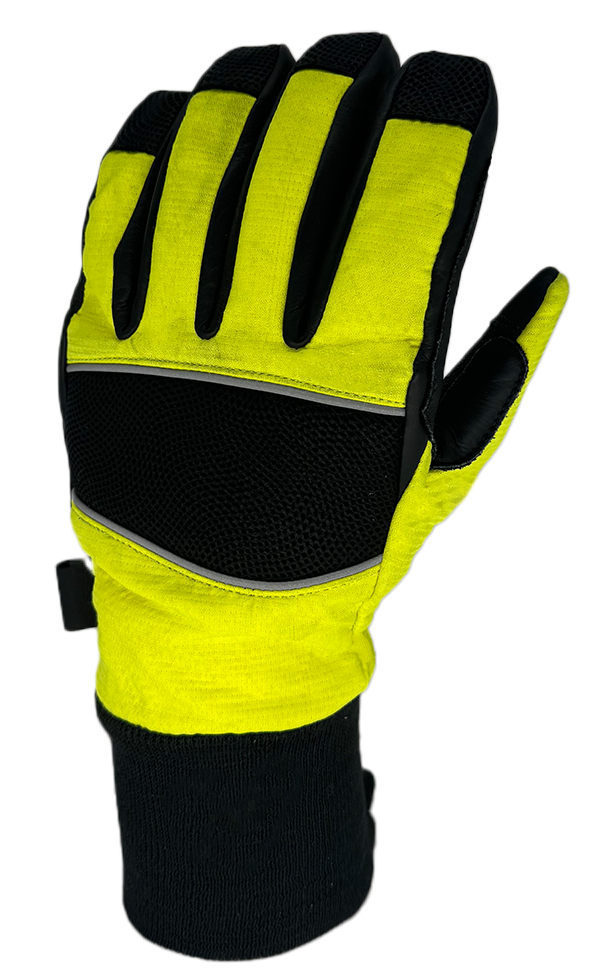
For structural firefighting, the AC-1-FFG-S synthetic firefighting glove takes a different approach. Non-leather and lightweight, it is rated for at least 20 washes at 60 °C — a significant step up for services running high-tempo laundry cycles. Its flexibility is the standout characteristic: this is a glove that offers genuine dexterity without sacrificing protection. For firefighters who have long complained that gloves make precise work harder, that matters.
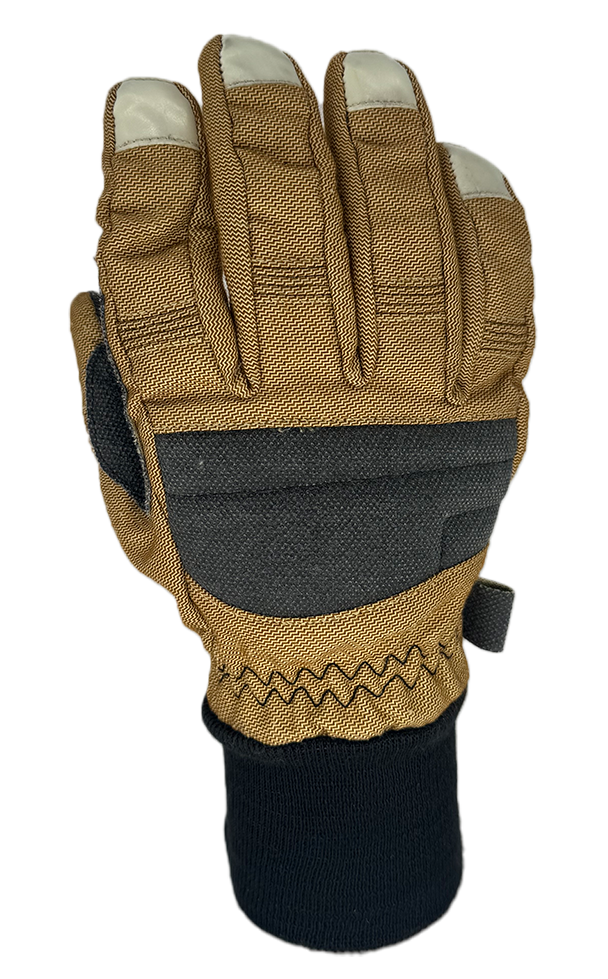
The EX-1-RSQ rounds out the range for those who need flame-retardant Nomex construction with a leather palm, and it is washable for at least 5 washes at 40°C. Available with either knitted or adjustable cuffs, it offers procurement officers a practical choice that aligns with operational preferences.
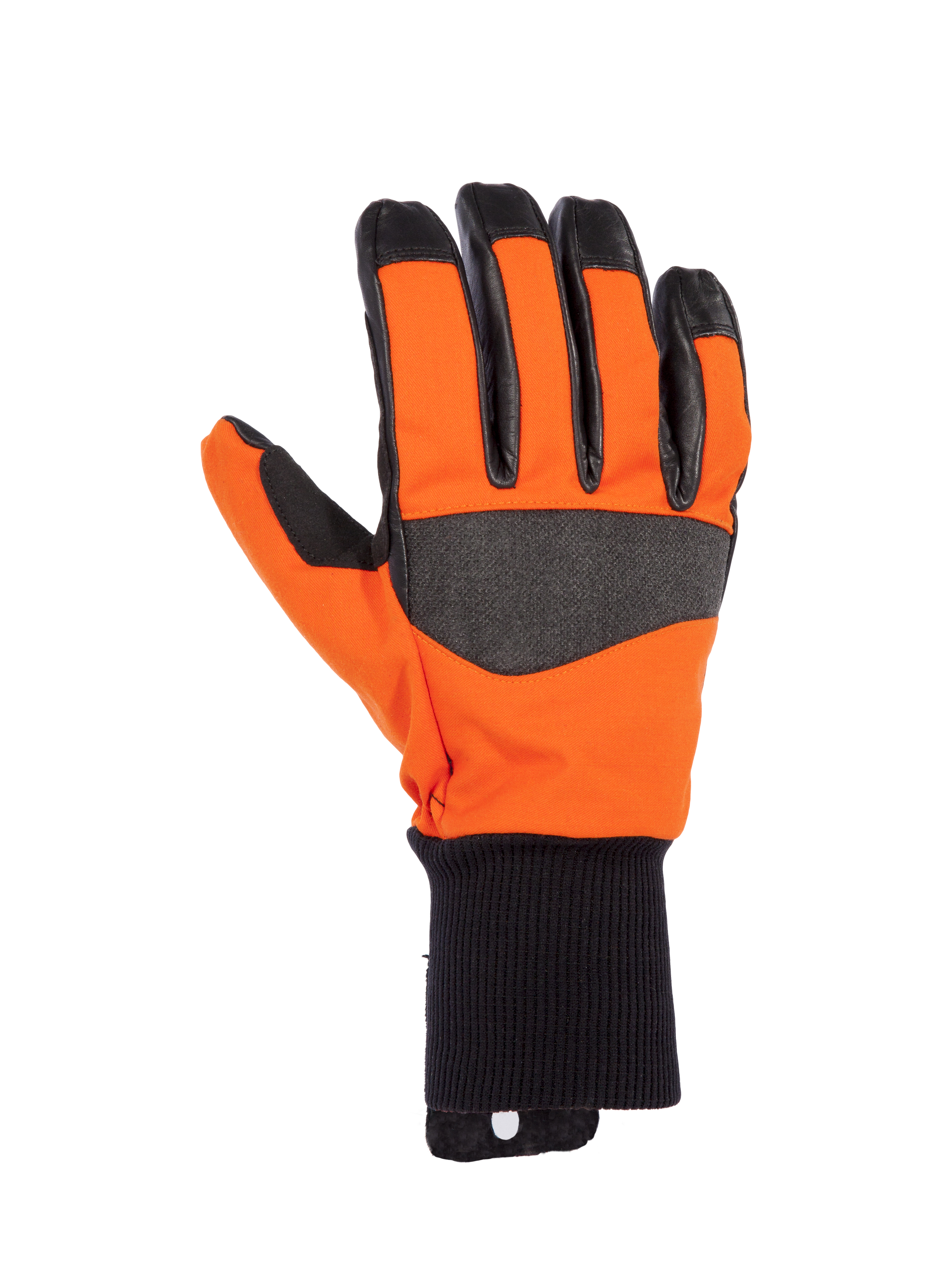
View the full Vimpex glove range here.
Conclusion
Gloves sit at the intersection of protection, dexterity, fit, and decontamination and for too long, UK fire services have had to accept compromise on at least one of those dimensions. The combination of improved washability ratings, synthetic construction, and better sizing options means compromise is no longer as steep as it used to be.
Meeting NFCC 2026 requirements is the floor. Supporting a decontamination culture that firefighters will actually follow in practice is the goal.
Talk to the Vimpex team about gloves and firefighter PPE decontamination. Call +44 (0)1702 216 999 or email [email protected].